
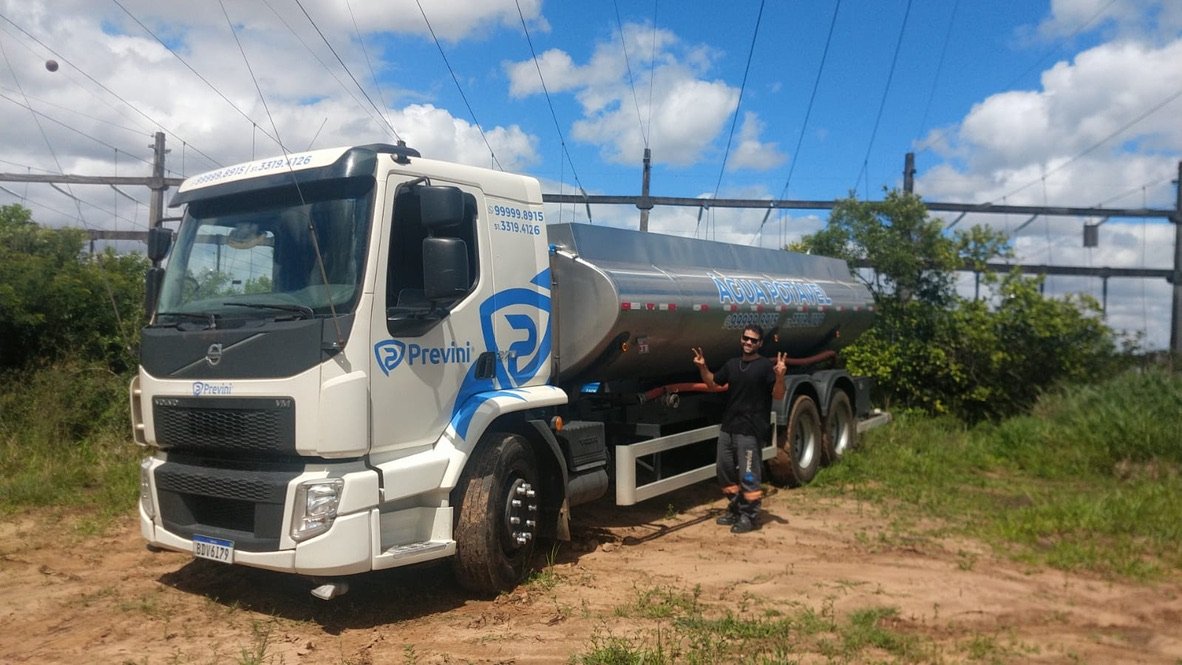
Drinking water delivery in Porto Alegre: plan the volume, tanker access and safe receipt of your water. Previni provides assistance in English for local homes and businesses. This guide covers volume in liters, the receiving tank, vehicle access, source documents and the checks that help protect water quality from the filling point to your property.
Photo: Previni archive

Guilherme Teixeira
CEO of Previni RS | Environmental Solutions Specialist
Published on October 24, 2026
Drinking Water Delivery in Porto Alegre: Water Tanker Service
Volume, access, water quality and a clear quote before dispatch
A water outage in a hotel, store, office, condominium or home quickly becomes an operational problem. The useful question is not simply “Can a truck bring water?” It is: what water is needed, how much will fit, can the truck reach the tank, and can the load be received without compromising water quality?
Previni RS coordinates drinking water delivery by water tanker in Porto Alegre and the metropolitan area. This is a local Brazilian service, not international physical delivery. The team and technicians can communicate in English.
First define the intended use
“Water delivery” may describe different products. Drinking water is intended for human consumption, food preparation and personal hygiene. Water for dust control, construction, irrigation or some pool-filling jobs may follow a different specification. A load is not potable merely because it looks clear. If the receiving tank supplies taps, kitchens, showers or guest rooms, say that drinking water is required. Identify pool and construction jobs separately.
How to calculate the volume to order
In Brazil, tanker capacity and reservoir volume are commonly discussed in liters or cubic meters. The conversion is straightforward:
1 cubic meter (1 m³) = 1,000 liters.
Start with the usable free space in the tank, not only its nominal capacity. Compare that space with recent measured consumption and the period the delivery must cover.
Hypothetical example: a small hotel has measured recent use of 4,800 liters per day and wants a 1,200-liter operational buffer while the regular supply is interrupted. The planned requirement is 6,000 liters:
4,800 L + 1,200 L = 6,000 L = 6 m³.
This is not a consumption standard. Demand changes with occupancy, kitchens, laundry, cleaning and activities that can be paused. Verify that the tank has at least 6,000 liters of usable free space; existing water, sediment and pump limits reduce what can be received. Vehicle capacity depends on dispatch conditions, so Previni should confirm the volume and delivery arrangement for the address.
Information that makes the quote accurate
There is no responsible universal price for water tanker delivery. The quote depends on volume, route, access, timing and transfer conditions. Sending these details early prevents a failed arrival.
| Information to send | Why it matters |
|---|---|
| Full address and a map pin | Confirms the route and the exact entrance |
| Intended use of the water | Separates drinking water from pool, construction or other applications |
| Required volume in liters or m³ | Supports load and trip planning |
| Tank capacity and current level | Reduces overflow and quantity errors |
| Access dimensions, gate, height limits and vehicle restrictions | Determines whether the assigned tanker can approach safely |
| Distance and level difference from parking point to tank inlet | Helps assess hose reach and transfer conditions |
| Inlet type, location and responsible person on site | Prepares the handoff and avoids an unattended discharge |
| Requested date and service window | Allows dispatch to check actual availability |
For a managed property, name the person who can open the tank area, authorize discharge and sign the service record.
What Brazilian drinking-water rules require
The governing reference is Brazilian, even when the customer communicates in English. Brazil’s current federal framework is Annex XX of Consolidation Ordinance GM/MS No. 5/2017, as amended by Ordinances GM/MS Nos. 888/2021 and 2,472/2021. The 2021 update made by Ordinance 2,472 concerns Article 44 and Annex 13; it does not change the tanker duties summarized below.
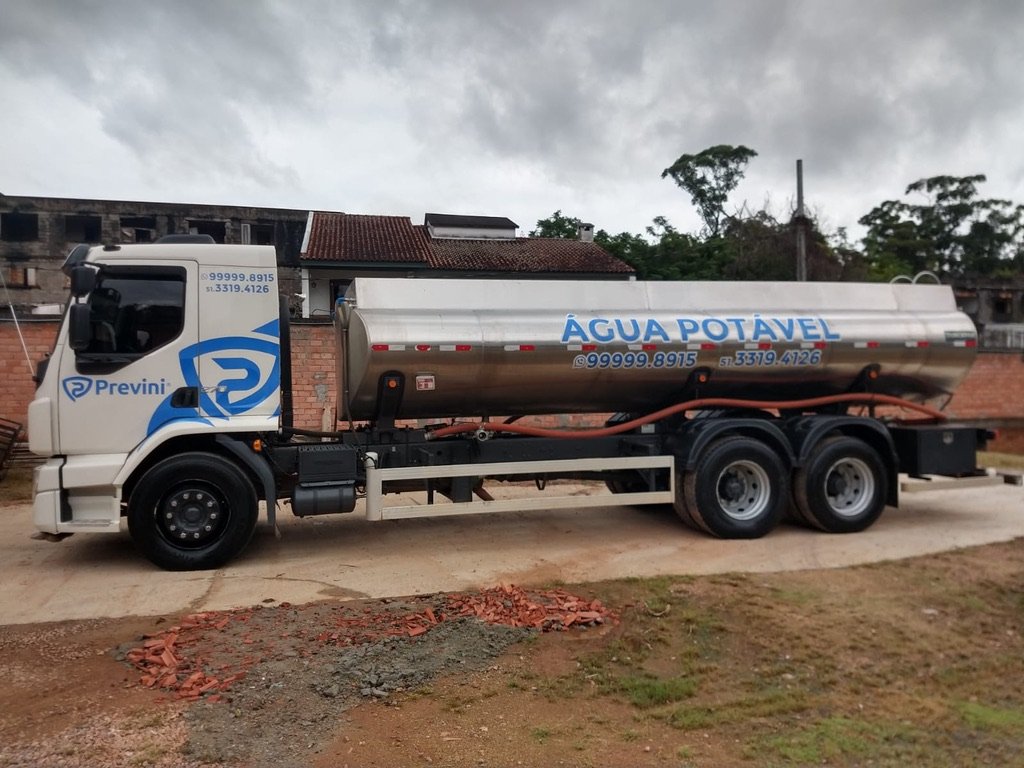
Article 16 requires the transporter to request public-health authorization and tanker registration; load only potable water from a water supply system or collective alternative supply; maintain sanitary conditions; and use tanks, valves and loading/unloading equipment dedicated to potable water and made of suitable materials. The tanker must visibly display “ÁGUA POTÁVEL” and contact information. A compartmentalized tank used for other loads cannot transport potable water.
The tanker must carry the authorization and a supply-point document identifying where it was filled, with date and time. Article 16 also sets a minimum free residual chlorine level of 0.5 mg/L during transport. This is an operator control criterion, not an instruction for a customer to add chlorine or estimate a dose.
For receiving due diligence, ask the provider to confirm:
- that the load is potable water;
- the source of supply and the source document with filling date and time;
- the applicable authorization for potable-water transport;
- whether current water-quality documentation can be made available for the supply involved;
- that the tank and transfer equipment are dedicated to potable water; and how hoses and connections are protected.
The source document is not a laboratory report. If a property policy requires analytical evidence, state that before dispatch and confirm what is current and applicable.
Receiving the tanker without losing control of the process
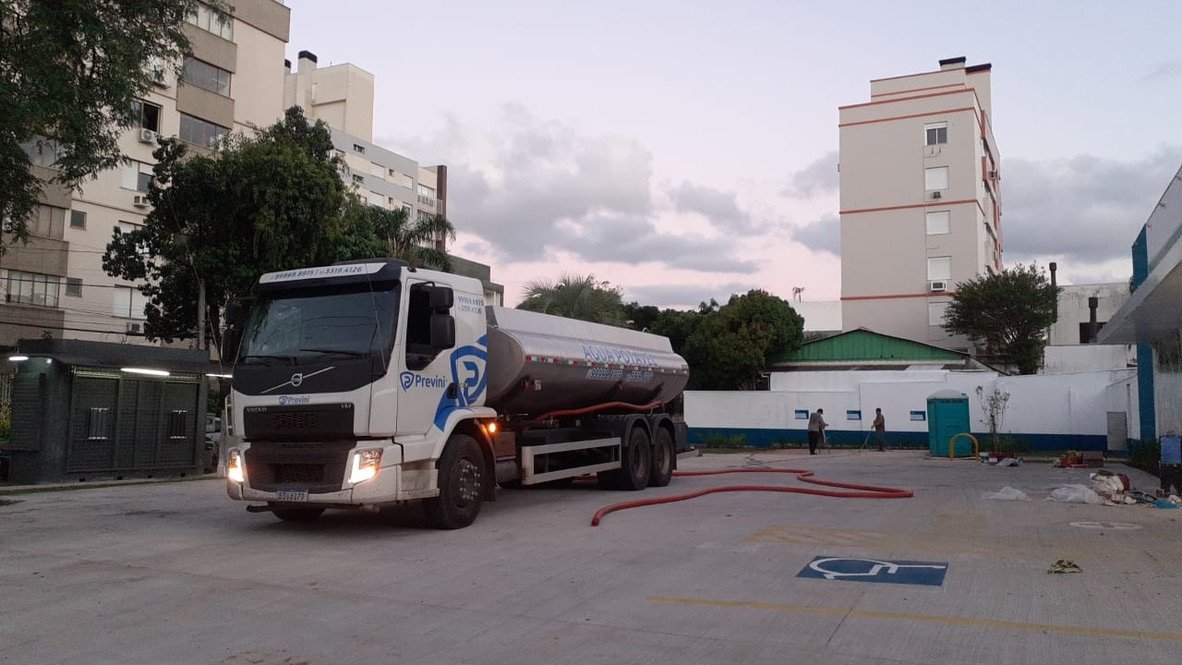
Assign someone who knows the reservoir to meet the driver. Keep unauthorized people and vehicles away; the site must provide safe access and a suitable receiving point.
| Checkpoint | What to verify before or during discharge |
|---|---|
| Vehicle and documents | Correct service, potable-water identification and agreed documents |
| Receiving tank | Correct tank, sufficient free space, lid and inlet in serviceable condition |
| Hose route | No contact with sewage, standing water, waste, fuel or vehicle traffic |
| Connections | Clean, protected and compatible with the inlet arrangement |
| Discharge supervision | Responsible person present; level monitored to prevent overflow |
| Completion record | Delivered amount or operational record confirmed with the provider |
Do not leave an open hose end on the ground or route it through contamination before connecting it. Potable water can be compromised after it leaves the source.
The receiving tank is part of water quality
Delivered potable water does not sanitize a dirty reservoir. If the tank is empty but contains sediment, slime, debris or evidence of pests, cleaning and disinfection should be completed before filling. The tank should close properly and be protected from entry by surface water, animals, dust and insects.
A flood-affected tank needs more than a refill. Isolate, empty, inspect, repair as necessary, clean and disinfect it before reuse. Seek guidance from the local health or water authority if contamination is suspected. New water does not clean contaminated walls, pipework, covers or seals.
During an outage, check the utility’s notice and expected restoration. Tanker delivery provides temporary continuity; it does not repair the network or diagnose unusual color, odor or taste. Report persistent changes to the supplier or health authority.
Communication and international-card payment
Previni confirms scope, volume, access and the budget before dispatch. It accepts USD and EUR through an international card, subject to transaction confirmation. Confirm the amount and billing currency before authorizing payment. The issuer or payment chain may apply exchange rates, conversion charges or other fees; check with the issuer. Do not assume zero fees.
English-speaking customers can use English with the Previni team and technicians. For the local Portuguese service description, see “Caminhão Pipa – Caminhão de Água Potável” (page in Portuguese).
Frequently asked questions
1. Is this drinking water delivery available outside Brazil?
No. Physical delivery is local to Porto Alegre and its metropolitan area. International customers may use English and the confirmed card option for a local service address.
2. Can I order water for both a drinking tank and a construction site?
Describe them separately. Construction, dust-control, irrigation or pool water must not be assumed to have the same specification as a potable-water request.
3. How many liters should I order?
Use measured demand plus the necessary buffer and compare it with usable free space. Convert with 1 m³ = 1,000 liters. Previni then confirms dispatch.
4. What documents should I ask to see?
Ask for the applicable transport authorization and supply-point document with source, date and time. Request any required analytical record before dispatch.
5. Can the tanker fill a tank after a flood?
Not as a substitute for remediation. Isolate, empty, inspect, repair as needed, clean and disinfect the tank before receiving potable water.
6. How is the price determined?
The budget considers volume, route, access, transfer conditions and timing. Request a site-specific quote and confirm what it includes.
A customer experience, in their own words
Request a local service in English
Tell Previni your address in Porto Alegre or the metropolitan area, the service you need, your preferred language and any access restrictions. The team can assist in English and Spanish.
Sources and regulatory reference
- Brazilian Ministry of Health: current drinking-water quality framework — official page in Portuguese.
- Brazilian Ministry of Health: Vigiagua legislation list — official page in Portuguese, including Ordinances GM/MS Nos. 888/2021 and 2,472/2021.
- Ordinance GM/MS No. 888/2021 — official text in Portuguese, especially Articles 5, 13, 14 and 16.
- Funasa: “Água transparente é sempre segura para beber?” — official guidance in Portuguese, explaining why appearance alone does not establish potability and why storage and distribution remain part of water-quality control.