
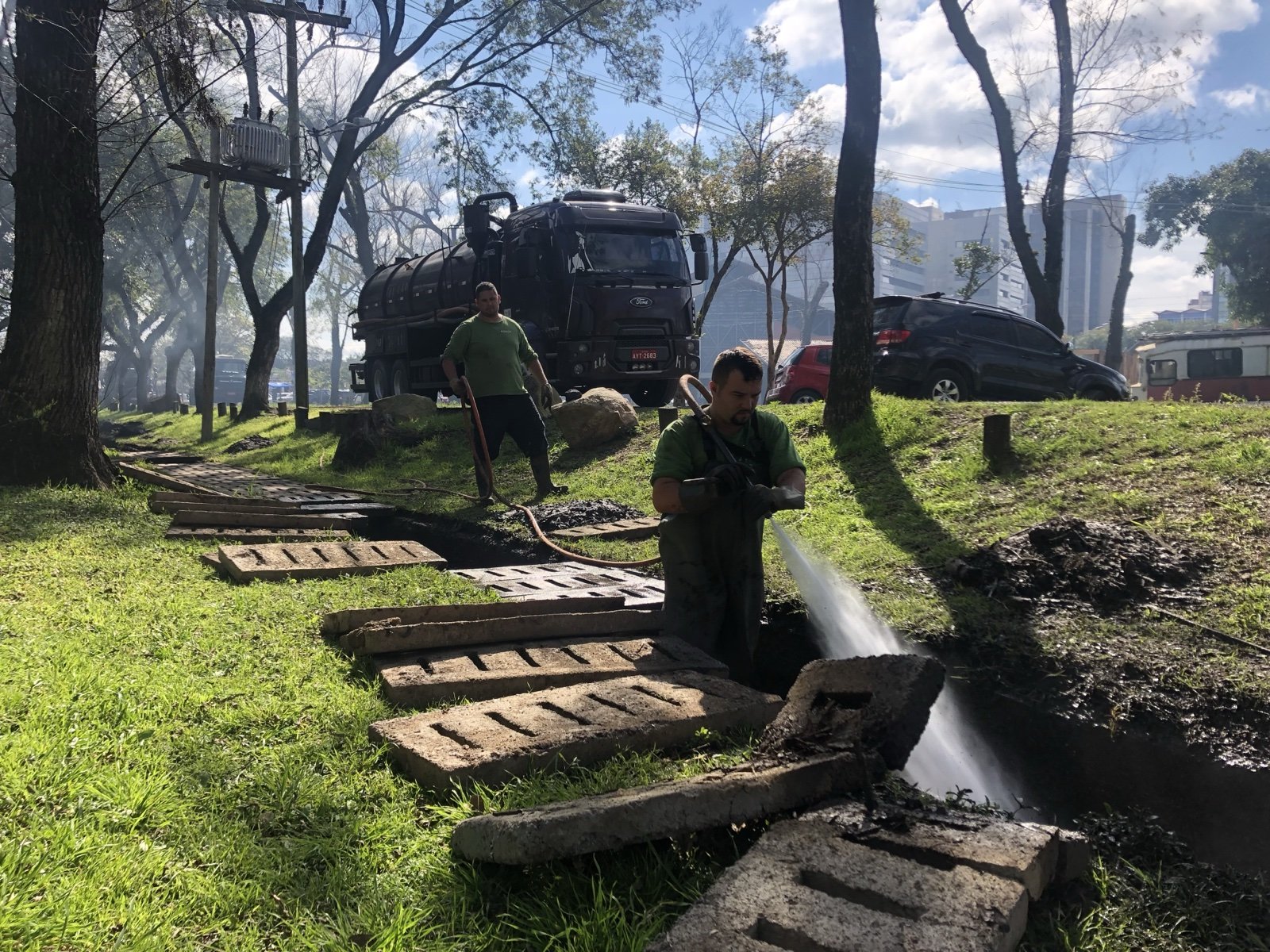
Pest control in Porto Alegre: learn when to request rodent or cockroach control, drain cleaning or a coordinated assessment. Previni offers assistance in English and Spanish. Compare the signs of pests with the signs of a blocked or damaged drain, prepare the property safely and request a written scope covering treatment, corrective work and follow-up.
Photo: Previni archive

Guilherme Teixeira
CEO of Previni RS | Environmental Solutions Specialist
Published on October 24, 2026
Pest Control in Porto Alegre: Pests, Drains and Sewage Problems
A practical guide to pest activity, sanitation and separate service scopes
Finding cockroaches near a floor drain or rat droppings beside a service area can make one conclusion feel obvious: the sewer must be the source. Yet the same signs can come from food storage, waste handling, wall gaps, neighboring units or a nest elsewhere. Treating every case as a sewer problem wastes time; treating every case with pesticide can leave the access route untouched.
The practical first step is to separate two questions: what evidence of pests is present, and is there also a plumbing or sewage fault? Pest treatment and drain or sewer cleaning are different scopes. They may need coordination, but one does not replace the other.
Previni RS has English- and Spanish-speaking team members and technicians. Here is how to prepare for an assessment without choosing the method in advance.
Start with the symptom, not with a treatment name
Before requesting “fumigation,” poison or sewer cleaning, note where and when the signs appear. A short record can make the first conversation much more useful:
- photograph droppings, insects, gnaw marks or damaged packages without handling them;
- record the room, time and frequency of each sighting;
- note slow drains, odors, leaks, wastewater returning through a fixture or standing water separately;
- identify food, waste, cardboard and visible gaps near the affected area;
- tell the provider if children, pets, pregnant people, older adults or people with respiratory sensitivities use the area.
Do not mix household chemicals or pour pesticide into a drain. Keep people and animals away from contaminated areas, protect food and utensils, and follow the product label and the professional's written instructions.
Is it pest control, drain cleaning or both?
| What you observe | Primary inspection to request | Why the scopes differ |
|---|---|---|
| Droppings, gnaw marks, tracks or repeated rodent activity, with no drainage failure | Rodent inspection and integrated control plan | Identify activity, food, water, shelter and entry points before selecting controls. |
| Live cockroaches, egg cases or repeated sightings around kitchens, bathrooms or service areas | Cockroach inspection and targeted control plan | Drains are only one possible route or habitat; sanitation, cracks, deliveries and adjacent units may also matter. |
| Slow flow, wastewater backup, gurgling fixtures or sewage overflow | Drain or sewer inspection and cleaning assessment | A blockage or damaged line is a plumbing/sanitation problem. Pesticide treatment does not remove an obstruction. |
| Pest evidence plus leaks, broken covers, gaps or recurring drain failure | Coordinated pest and drainage assessment | The building may need two corrective scopes in a deliberate sequence. |
| A single insect with no repeated evidence | Identification and monitoring before broad treatment | Correct identification helps avoid unnecessary application and directs attention to the real source. |
For sewage returning into an occupied area, restrict access and arrange a drainage assessment. If the drains work normally, sewer cleaning is not the default response to pest sightings.
What an integrated pest management inspection looks for
Integrated pest management, or IPM, is a decision process rather than a product. The inspection looks for the pest, the conditions sustaining it and the routes through the property.
Professional rodent control and cockroach control start with that evidence, though their measures differ.
Food: open packages, grease, crumbs, pet food and refuse.
Water: leaks, condensation, standing water and damp fixtures.
Shelter: clutter, cardboard, voids, warm equipment areas and inaccessible storage.
Entry points: gaps, damaged screens, cracks, penetrations, drain covers and connections between units.
The professional can combine monitoring, sanitation and exclusion with traps, baits or registered products when appropriate. The method should follow the identified pest, site and product label. A broad chemical application is not automatically the best response, and “fumigation” does not describe every professional technique.
Drains can be relevant without being the whole explanation
Moisture, residue, damaged seals or unprotected openings can make drainage areas attractive or accessible to pests. That does not prove that a particular pipe or the public sewer is the origin.
A drainage specialist assesses blockage, wastewater return and hydraulic faults. A pest professional assesses activity, harborage and entry routes. When both are present, ask which defects belong to each scope and in what order they should be corrected.
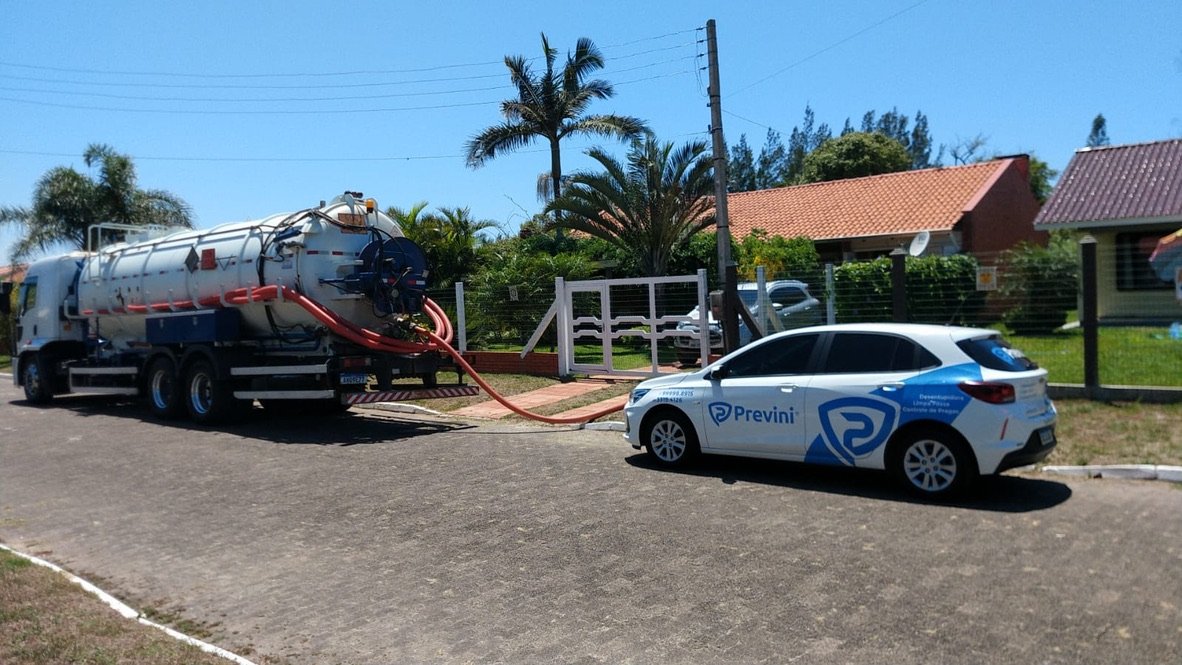
Previni's Portuguese-language pages provide context for pest control, integrated pest management, rodent control, insect control and sewer cleaning. Request English or Spanish assistance to discuss the scope.
Safety: products, children, pets and re-entry
Ask which product and method are proposed, where they will be used and what preparation is required. Brazilian health rules cover urban pest-control companies. Request site-specific instructions, not a generic waiting period.
Keep children and pets out for the period stated on the label and in the professional's instructions. Do not move bait, traps or treated materials without guidance. Clarify food protection, aquariums, ventilation, cleaning restrictions and re-entry. Resolve unclear instructions in writing before work begins.
Avoid improvised poison use. Unplanned placement creates exposure risks, can interfere with monitoring and may leave inaccessible carcasses. More product does not mean better control.
How to compare a quote and define the budget
A quote should show what the price covers. No universal price or interval fits every property: area, pest, activity level, access, operating restrictions, corrective work and follow-up change the scope.
| Quote item | What to confirm before authorization | Budget risk if omitted |
|---|---|---|
| Inspection basis | Pest evidence, affected areas and access limitations recorded | A generic proposal may not address the observed problem. |
| Included areas | Unit, common areas, kitchen, stockroom, perimeter, shafts or drains | “Full property” can mean different things. |
| Control method | Monitoring, exclusion, sanitation actions, traps, baits or product application | The client cannot prepare the site or compare competing scopes. |
| Drain/sewer work | Listed as a separate line when inspection or cleaning is needed | Pest treatment may be mistaken for blockage removal, or vice versa. |
| Preparation and re-entry | Steps for staff, residents, pets and food-contact areas | Restrictions may appear only after booking. |
| Follow-up and report | What is documented and what triggers reassessment | Avoid assuming an undefined “warranty.” |
For a condominium, restaurant or foreign-owned business, confirm the responsible contact, access, restricted areas, briefing language and report format. The report should separate observations, treatment and corrective recommendations; a pest-control visit does not prove that sanitation or structural repairs were completed.
Payment and communication for international clients
Previni RS confirms English- and Spanish-speaking team members and technicians, and accepts USD and EUR by international card. Confirm the amount, charging currency and scope before authorization. The issuer or network may apply conversion or other fees; check its terms. Do not assume an exchange rate.

Frequently asked questions
1. Does seeing a cockroach near a drain prove it came from the sewer?
No. The location is evidence, not proof of origin. Moisture, food, gaps, neighboring units and harborages also matter.
2. Can a pest-control treatment clear a blocked sewer line?
No. Pest control targets identified pest activity. A blockage, overflow or damaged drain requires a separate drainage or sewer assessment.
3. Should I pour insecticide or rodent poison into a drain?
No. Do not improvise pesticide use in drains. Follow the product label and the written instructions from the provider responsible for the treatment; use drain cleaning or repair for plumbing faults.
4. How long must children and pets stay away after treatment?
There is no single period for every method and product. Follow the specific label and the written instructions provided for the site before re-entry.
5. Does every condominium or restaurant need treatment on the same routine interval?
No. Monitoring, pest pressure, building conditions, food operations, history and applicable requirements should determine the plan. Ask what supports the proposed frequency.
6. What should I request after the visit?
Request the inspected areas, evidence, work performed, products or devices when applicable, safety instructions, unresolved issues, recommendations and follow-up conditions.
A customer experience, in their own words
Request a local service in English
Tell Previni your address in Porto Alegre or the metropolitan area, the service you need, your preferred language and any access restrictions. The team can assist in English and Spanish.
Primary references
- Brazilian Health Regulatory Agency (ANVISA): official overview of RDC 622/2022 for specialized urban vector and pest-control companies.
- United States Environmental Protection Agency (EPA): Integrated Pest Management principles.
- United States Environmental Protection Agency (EPA): pesticide safety tips.